Plugging bad data into a bad model: Why should we have confidence in the Federal Reserve?
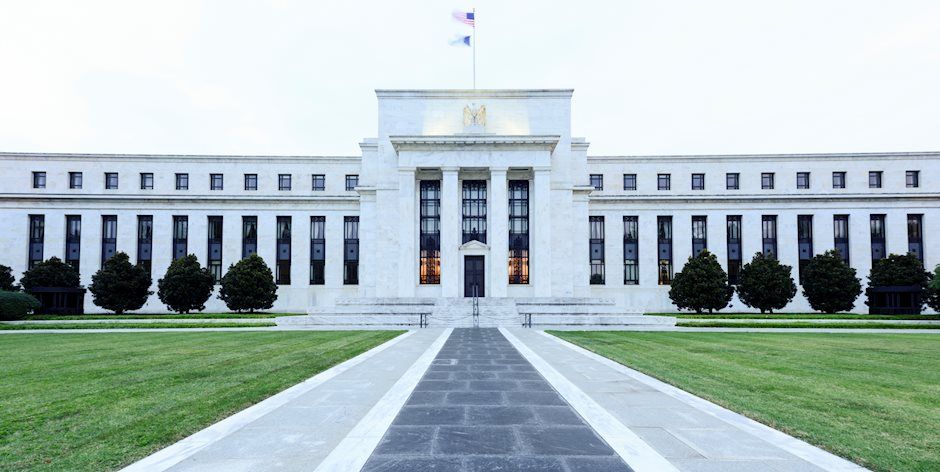

The Federal Reserve boasts of its data dependence. But what if it’s relying on bad data?
Even worse, what if it’s plugging that bad data into a faulty model?
In July, the Bureau of Labor Statistics (BLS) made massive downward revisions to the job numbers. Poof – the agency simply erased 111,000 jobs from existence.
This has been an ongoing pattern. The BLS releases a report. The media trumpets the greatness of the labor market. And then the BLS quietly revises the numbers down a month or two later and you hardly hear a peep.
The BLS struck again last week when it released revisions to its June Job Openings and Labor Turnover Survey (JOLTS) report. It initially reported 8.18 million job openings. The media reported this as great news -- better than expected. The revised number came in at 7.910 million job openings.
That was a miss.
But as a post on X by ZeroHedge put it, “Of course, nobody cares one month later. This is how the Kamala/Biden Department of Labor has operated for the past 4 years.”
You might be tempted to laugh this off as “politics as usual,” but when you consider that the central bankers at the Federal Reserve use this data to make monetary policy decisions, it’s not funny.
Federal Reserve Chairman Jerome Powell and his fellow central bankers constantly talk about their “data dependence.” Kansas City Fed president Jeff Schmid recently said he wants to see "more data," before deciding on a rate cut.
They wear data dependence like a badge of honor. After all, it does sound “sciency.” But given the reliability of the data, maybe they should rethink the approach.
Prior to Jerome Powell’s speech at Jackson Hole, Independent Institute Senior Fellow Judy Shelton appeared on Fox Business to talk about Fed monetary policy. Shelton is an economist and the author of several books, including Good as Gold How to Unleash the Power of Sound Money.
Shelton made a strong case against this data-dependent approach at the Fed. After all, bad data is going to lead to bad decision-making. As Shelton said, “There's good reason for all of us to be skeptical about that data, especially when it gives us conflicting results," pointing out that “there have long been discrepancies between the payroll jobs numbers and the household survey."
“You end up getting these conflicting numbers that on the one hand said that we had tremendous job growth, and now we're wondering if that was all a mirage.”
That leads to the logical conclusion.
“The fact that the Fed is so data-dependent should not give us confidence.”
During his Jackson Hole speech, Powell effectively surrendered to inflation, saying that the “balance of risk” has moved away from inflationary pressures to shakiness in the jobs market. But given the revisions to the data, it appears the Fed is behind the curve. The job market has been shakier than advertised for quite a while.
It gets worse.
Not only is the Fed using bad data, it plugging it into a bad model.
Shelton pointed out, “It's ironic that on its own website, the Fed admits it can't have much impact on the labor market and that it tends to be driven more by structural variables.”
The Federal Reserve primarily relies on curtailing demand. That’s the whole point of rate hikes. But as Shelton noted, the Fed can only impact demand on the consumer side of the economy. It has little to no impact on government spending, and that’s a big part of the equation.
“I sometimes wonder - how is the Fed going to explain why inflation came down at all? Is it just because they made the cost of capital so expensive for private business that they couldn't hire people? They couldn't expand?"
Meanwhile, government spending has gone on unabated. The Biden administration is blowing through half a trillion dollars every single month and running massive budget shortfalls in the process. But Powell refuses to even talk about it, instead insisting that the central bank just takes the fiscal situation “as given.”
Shelton drove home an important point. The central bank should at least acknowledge the contribution of government debt and spending to the inflation situation.
“It's not clear that they're really accomplishing their goal, and yet they stick with that model and claim that they have responsibility for price stability no matter what the government does.”
At least some people at the Federal Reserve know they can't control inflation alone. A paper co-authored by Leonardo Melosi of the Federal Reserve Bank of Chicago and John Hopkins University economist Francesco Bianchi and published by the Kansas City Federal Reserve argues that central bank monetary policy alone can’t control inflation. U.S. government fiscal policy contributes to inflationary pressure and makes it impossible for the Fed to do its job.
"Trend inflation is fully controlled by the monetary authority only when public debt can be successfully stabilized by credible future fiscal plans. When the fiscal authority is not perceived as fully responsible for covering the existing fiscal imbalances, the private sector expects that inflation will rise to ensure sustainability of national debt. As a result, a large fiscal imbalance combined with a weakening fiscal credibility may lead trend inflation to drift away from the long-run target chosen by the monetary authority.”
If the monetary policy alone can't control inflation, and the government has no intention of getting its fiscal house in order, why should we have any confidence that the Fed really has beaten inflation?
As Shelton pointed out, this also raises questions about the future.
“What if inflation starts ramping up again because of the government spending? Won't the Fed have to go back to its model and its only tool to curtail demand is to raise interest rate?”
When you put it all together, it's clear we shouldn’t have any confidence in the Federal Reserve. It is plugging bad data into a faulty model. This isn’t exactly a recipe for success.
To receive free commentary and analysis on the gold and silver markets, click here to be added to the Money Metals news service.
Author
Mike Maharrey
Money Metals Exchange
Mike Maharrey is a journalist and market analyst for MoneyMetals.com with over a decade of experience in precious metals. He holds a BS in accounting from the University of Kentucky and a BA in journalism from the University of South Florida.

















